
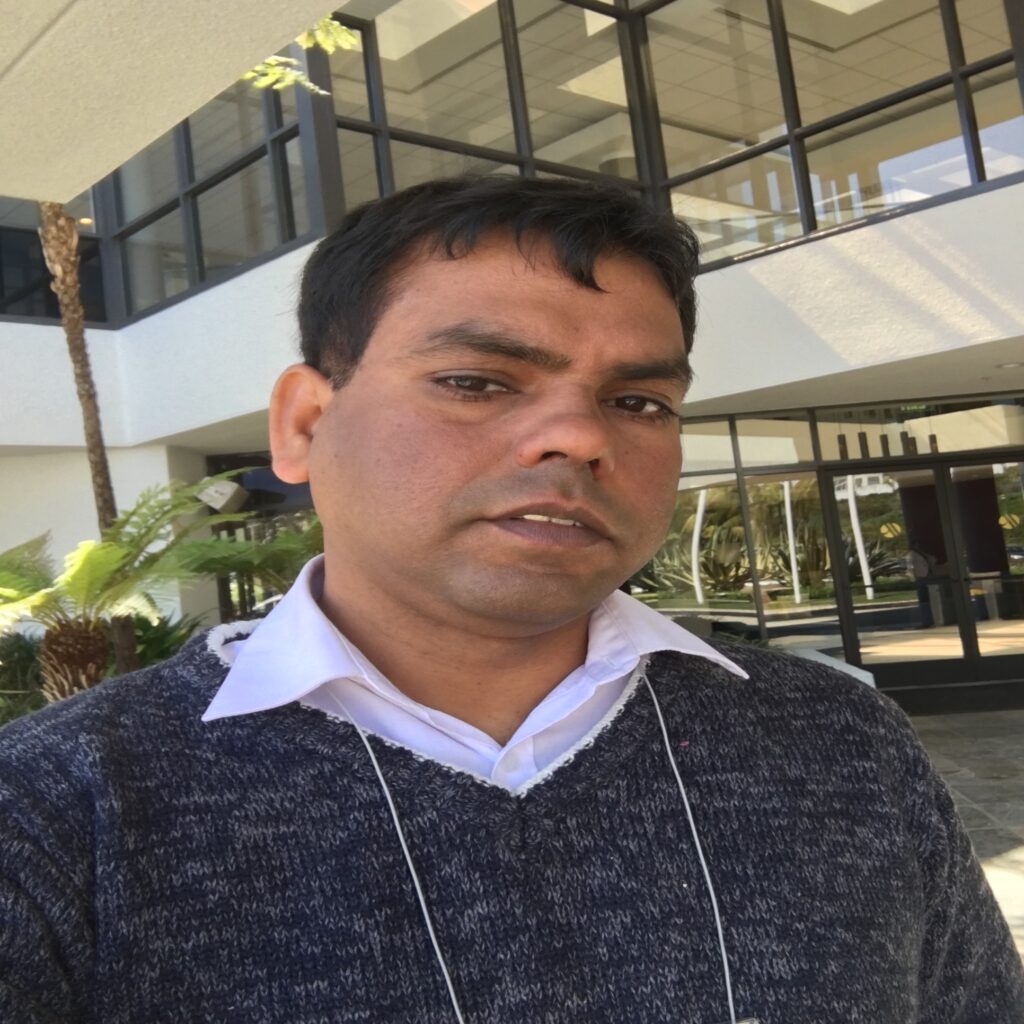
Dilip Shah Scientist grew up in Nepal with a natural curiosity for how the world works. That early fascination turned into a lifelong commitment to science, education, and meaningful impact. His path wasn’t easy, but it was built on discipline, humility, and grit — qualities that shaped his success both inside and outside the lab.
He earned his B.Sc. in Chemistry, M.Sc. in Biochemistry, and Ph.D. in Biochemistry through competitive government fellowships in Nepal and India. These accomplishments opened doors and taught him the value of showing up prepared, even when resources were limited. “Education was my biggest opportunity,” he often says, and he treated it like one.
His research career spans several major fields: immune regulation, oxidative stress, neonatal lung biology, molecular targeting, and advanced immunotherapies like CAR-T and ADCs. He became known for bridging disciplines and looking at problems from multiple angles. One of his breakthroughs — using a handheld laser to strengthen vaccine responses — came from challenging assumptions and asking “why not?”
Success for Shah has never been only about results. It’s about consistency, ethics, teamwork, and the ability to stay curious even when experiments fail. He believes in what he calls “Better Science,” a mindset rooted in transparency and integrity.
Outside the lab, he enjoys cricket, soccer, the Super Bowl, and reading about new ideas. His story shows how far curiosity and discipline can take a person — from a small town in Nepal to the frontlines of modern biomedical research.
Q&A with Dilip Shah Scientist
How do you personally define success?
Success, to me, isn’t a single moment or achievement. It’s the ability to stay consistent over long periods of time. In research, progress rarely comes in big leaps. It comes from showing up every day, even when an experiment fails or a hypothesis collapses. I grew up in Nepal with limited access to scientific tools, so consistency became my advantage. If I kept learning and kept asking questions, I felt successful.
What does a successful day look like for you?
A successful day is one where I learn something — even if it’s small. Sometimes it’s new data in the lab. Other times it’s a conversation with a student or colleague that shifts my perspective. I start my day reviewing scientific journals with a cup of coffee. It keeps me sharp and grounded. If I end the day with clarity about my next steps, that’s success.
What habits contribute most to your achievements?
I track my progress daily. I write down what worked, what didn’t, and what I’m focusing on tomorrow. This habit started during my Ph.D. when I was studying oxidative stress and immune cell signaling. I often had long, confusing days in the lab. Writing forced me to find patterns. Over the years, that small habit turned into a powerful tool.
What role has education played in your success?
Education changed my entire life. The government fellowships I received in Nepal and India made it possible for me to pursue higher studies. Without them, I wouldn’t be where I am. My degrees weren’t just credentials — they were stepping stones that taught me discipline and gave me the confidence to explore difficult problems.
How do you overcome setbacks?
I see setbacks as part of the job. In one early project on antioxidant systems, a series of failed experiments forced me to rethink my approach. At first, it felt like wasted time. Later, I realized those failures moved me closer to the answer. When something goes wrong, I step away, take a walk, and return with a clearer mind. That pause often reveals the solution.
What’s a belief you hold about success that others might disagree with?
I believe that slowing down can actually make you more successful. In science, speed is often seen as a strength. But rushing leads to mistakes. Earlier in my career, I submitted work too quickly and a reviewer pointed out inconsistencies. It was humbling, but it taught me that precision matters more than pace. Slowing down made my work more credible and impactful.
What’s one strategy that helped you grow in your career?
Mentorship. Teaching others clarifies your own thinking. Every time I guide a young scientist through a problem — whether it’s Western blot optimization or interpreting flow cytometry data — I sharpen my own understanding. Mentorship isn’t a one-way street; it’s mutual growth.
What’s one piece of advice you’d give your younger self about success?
Don’t rush your journey. Stay patient. The results will come. I spent years studying mitochondrial dysfunction in neonatal lungs, and progress was often painfully slow. But every detail mattered. I’d tell my younger self: patience is a skill, not a weakness.
What do you do when you feel unfocused?
I step outside. Even five minutes of fresh air resets my mind. During my laser-based vaccine research, I often found solutions during short breaks rather than long hours staring at data. A quiet moment can be more productive than a loud one.
What’s one idea you believe could help others succeed?
Document your thoughts regularly — even the imperfect ones. Ideas fade fast. Some of my best insights came from notes I almost ignored later. Success often hides in the margins of a notebook.
Key Learnings
- Success comes from consistency, clarity, and patience rather than speed.
- Daily reflection and note-taking improve decision-making and long-term progress.
- Mentorship accelerates growth for both mentor and mentee.
- Setbacks are part of discovery and often lead to stronger outcomes.
- Curiosity and discipline create sustainable success over time.