
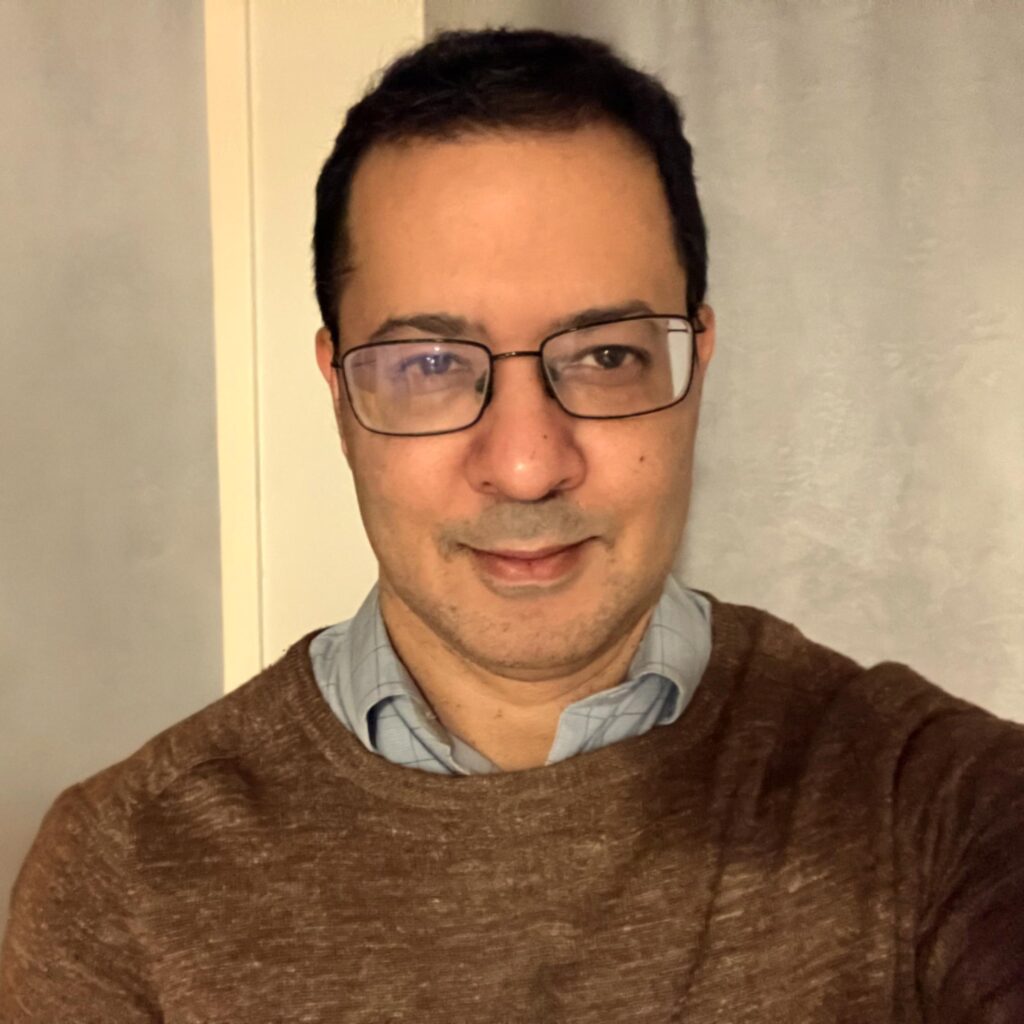
Philip Kretsedemas has built a career at the intersection of ideas, impact, and leadership.
Born in Toronto to a Greek father and Jamaican mother, Philip grew up across cultures. He lived in the Bahamas and England before settling in South Florida. That early global experience shaped how he sees identity, community, and national belonging.
He earned a B.S. in Communications from the University of Miami, with a focus on film and screenwriting. Soon after, he pivoted toward sociology, and carried forward his interest in media studies into his PhD studies at the Sociology Department of the University of Minnesota, which he completed in 1997.
Media audience studies continued to be a running theme of Philip’s research agenda from the 2000s onward, as illustrated by his focus group research on viewer attitudes toward the television show Ugly Betty, which was the first prime time, network television show in the US to feature a Latina lead character. This research was featured in the Journal of African American Studies and anthology titled The Colorblind Screen that was published by New York University Press.
These publications provide a good example of how Philip’s media studies research began to integrate the themes of immigration, race-ethnicity and gender which became the primary focus of his published work through the 2010s and 2020s.
Beyond academia, Philip has worked inside nonprofit organizations on the front lines of immigration reform. Today, he serves as Managing Director of Research, Evaluation, and Data Analytics at the Acacia Center for Justice. He leads national research efforts that shape policy conversations.
Philip’s most recent pivot is toward the personal. He has recently launched a website, simply titled, Philip Kretsedemas which is focused on self care. Although the content on the website may seem like a significant departure from his decades-long focus on weighty social and policy issues, Philip’s goal is to translate everything he’s learned from his professional experiences in academia and the nonprofit world into actionable insights that are accessible to everyone. The website contents–which include essays and a new podcast series–are about engaging all of the issues that have defined his scholarly research from the inside out; starting with self care and slowly building up to an analysis of the “bigger” issues of the day, in a way that remains grounded in personal experience and a personal ethics.
Another central thread of his new project is Philip’s use of the genealogical method, as a way of creating knowledge that is tailored to the singular details of our lives. Philip’s interest in the genealogical method stems from the role he played as the inaugural editor-in-chief for a scholarly journal titled, Genealogy, that he launched over eight years ago. At the time, this project seemed like an esoteric departure from Philip’s focus on immigration, social policy and race/gender studies, but as with so many other things in life, these inauspicious developments end up becoming cornerstones for an entirely new way of seeing.
Philip’s renewed appreciation for the genealogical method has allowed him to rediscover the connecting threads that were running through all of the pivots he has made over the past several decades. With his latest project, he is using this method to synthesize lessons learned from his personal experience and his professional expertise in an entirely new way,
This project also demonstrates that, at his core, Phil is a builder. A builder of ideas. A builder of dialogue. And a builder of community.
You’ve had a long career in academia and public policy. How do you define success?
Success, for me, has never been about titles. I’ve been a full professor. I’m now a Managing Director at a national nonprofit. Those things matter, but they’re not the core.
Success is about alignment. It’s about whether my daily work reflects my values. When I was researching the effects of the Clinton-era welfare and immigration reform laws for immigrants at Catalyst Miami, I saw how policy decisions shaped real families. That changed me. I realized success meant producing work that could improve people’s lives, not just advance my CV.
If my research helps someone think more clearly about immigration, race, or security, that’s success.
You started in film school before earning a Ph.D. in sociology. How did that shift shape your path?
It taught me that success is not linear.
I studied screenwriting at the University of Miami. I worked briefly in commercial production in South Florida. But I wanted to understand systems, not just stories. So I moved to Minneapolis in the early 1990s to pursue a Ph.D. in Sociology at the University of Minnesota.
That was a humbling shift. I went from creative production environments to deep theory and research. Graduate school forced discipline. It forced long-term thinking. Writing a dissertation is not glamorous. It’s a test of endurance.
That period taught me that success often looks like sustained focus on something most people won’t see.
You’ve worked in both academia and nonprofit policy spaces. What did each teach you about achievement?
Academia taught me rigor. Nonprofit work taught me urgency.
When I was a professor at UMass Boston, I had the privilege of time. I could explore ideas. I could write books and peer-reviewed articles. That’s valuable.
But when I worked with the National Immigration Project in the early post-9/11 years, everything felt immediate. Policies were shifting fast. Immigrant communities were under pressure. There was no time for abstract debate.
That experience reshaped my idea of success. It wasn’t enough to be right. You had to be useful.
You’ve written extensively about immigration and the Black migrant experience. How has your personal background influenced your idea of success?
I was born in Toronto to a Greek father and Jamaican mother. I lived in the Bahamas and England before growing up in South Florida. I’ve always moved between identities.
That background made me comfortable with complexity. Success, for me, has meant learning to hold multiple perspectives at once. It also meant understanding that belonging is not automatic. You build it.
When I worked as the lead researcher on the Minnesota Historical Society’s first public exhibit on the Black community, I saw how invisible stories could become visible through research. That project stays with me. It showed me that success can mean restoring narratives that were overlooked.
What role has failure or setback played in your journey?
More than people think.
There were times in academia when articles were rejected. Grants didn’t come through. There were moments in nonprofit work when policy recommendations didn’t gain traction.
Early in my career, I tied those outcomes to my sense of worth. Over time, I realized that success is cumulative. One rejected paper does not define you. One stalled policy does not erase your impact.
I’ve learned to measure success over decades, not quarters.
You’re now focused on connecting policy, ethics, and personal life. Why?
Because I’ve seen how disconnected they can become.
Security studies, immigration enforcement, anti-terrorism policy—these are high-level issues. But they are driven by human fear, identity, and ethics. If we ignore that, we misunderstand the system.
Raising my daughters has sharpened this perspective. I think about what kind of civic culture they are inheriting. Success now includes modeling thoughtful engagement. It includes teaching them that intellectual work should serve community.
After more than two decades in your field, what practical habits contributed most to your success?
Consistency. Writing regularly. Reading outside my discipline. Staying curious.
I’ve also made a habit of moving between worlds. I’ve taught at research universities and smaller institutions. I’ve worked in Miami, Minneapolis, Toronto, and Boston. Each move expanded my frame of reference.
Finally, I’ve tried to avoid intellectual isolation. Whether through public writing or podcast conversations, I believe success includes dialogue. Knowledge should circulate.
If you had to summarize success in one sentence, what would it be?
Success is building a life where your work, your values, and your community reinforce each other over time.