
Brodrick Spencer has spent nearly thirty years building systems in education and nonprofits that outlast his time in the room. He began his career as a social studies teacher and athletics coach, serving also as a department chair before moving into school administration. He spent eight years as an assistant principal and thirteen years as a secondary principal across multiple school districts in New York, leading middle and high schools in some of the state’s most demanding environments.
Today he serves as Southern California Director of Operations for the William Law Foundation, overseeing afterschool programs and childcare centers. He holds a Master of Education from Howard University and a Bachelor of Arts in Law and Society from the University of California, Santa Barbara.
A 35-year member of Omega Psi Phi Fraternity Incorporated, Spencer has organized voter registration drives, college tours for youth, mentorship programs, and community health initiatives throughout his career. His work is grounded in a belief that sustainable impact is measured not by personal achievement but by the systems you leave behind.
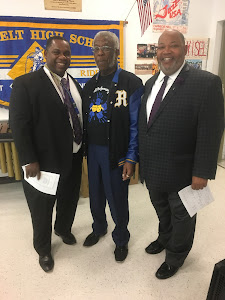
A Conversation with Brodrick Spencer
How do you define success in your professional life?
Success is defined by accomplishing the goals I’ve set. But the measuring rod is not what I’ve done for myself. It’s what I’ve done for those I serve. Even more than that, it’s the sustainability of the systems I’ve put in place after I’m no longer present. If the work stops when I walk out the door, I haven’t succeeded.
Was there a moment early in your career when that idea crystallized for you?
Working with young people from the beginning, as a mentor in high school and college, I saw what happened when support was inconsistent. Students would thrive under one leader and struggle when that person left. I decided early that my job was to build something bigger than my own presence. That principle followed me from the classroom into administration and into the nonprofit work I do today.
You spent thirteen years as a principal in some of New York’s most challenging schools. What kept you going through that?
I focused on what I could control in the moment. I have worked in some of the most challenging and unstable educational systems in America. What worked was listening before acting, observing before redesigning, and building the people around me rather than relying solely on my own judgment. I created smart goals and involved all stakeholders in the decision-making process. Everyone was held accountable, including me.
Tell me about a failure and what you learned from it.
Early as a principal, I tried to reform too many systems at once. I thought urgency justified the pace. It didn’t. Staff became overwhelmed. Progress slowed. I had to step back, reassess, and sequence the work differently. Now I prioritize ruthlessly. I communicate clearly about what we’re changing and why. And I pace implementation so that people can absorb it. That lesson took me a while to learn, but it changed how I lead.
What habits help you stay productive when the pressure is high?
I use a written check-off system. Digital tools are useful, but writing things down creates a different kind of commitment. I review my priorities before I look at email in the morning. I ask myself what actually needs to move forward today. And I revisit unfinished goals weekly to understand why they stalled. Some goals need more time. Others need a different approach. You find out which is which only if you keep looking.
How do you handle setbacks without losing momentum?
I focus on the goals, what has been accomplished, and controlling what I can control in the moment. I plan for how to overcome the challenge and I identify the support systems I can call upon. I use honest conversations and I hold myself accountable. Blaming circumstances is a way of avoiding responsibility. I don’t find it useful.
What do you know now that you wish you had understood earlier in your career?
Be patient with progress. I wanted results fast early in my career. Sustainable change takes time and it takes trust. You can push a system, but you can’t rush relationships. The schools and programs that made lasting progress were the ones where trust was built before the big changes happened.
How do you measure whether your work is actually making an impact?
I surround myself with people who are accomplished and honest about the field. I ask them for direct feedback. I use reliable statistical data to analyze outcomes. And I look at before-and-after metrics. Not to justify decisions already made, but to understand what is actually working and what needs adjustment. The quality of the product is the measure. Not the effort put into it.
What does the long game of leadership look like to you?
You have to be able to live with yourself and the decisions you have made. You have to be able to look in the mirror and say that you have been fair and did what was in the best interest of those you are responsible for serving. Legacy in my field is not a title or a recognition. It’s a mentored assistant principal who went on to lead her own school. It’s a program that continued running years after I left. That’s the long game.