
Akshay Kumar is a Business Development Director, entrepreneur, and philanthropist based in Houston, Texas. His career spans business development, real estate, finance, marketing, portfolio management, and education, with experience working across both the United States and India. He earned a degree in Business Management from Penn State University in 2015 and later completed his MBA at Rice University in 2024, graduating with honors from both institutions.
Growing up in an entrepreneurial family taught Kumar the value of hard work, resilience, and discipline, but his experiences outside of business have had an equally lasting impact. Inspired by his parents’ commitment to service and his sister’s journey with a mental disability, he has dedicated much of his time to volunteer work and philanthropy. His efforts have supported nonprofit initiatives focused on disability services, education, women’s empowerment, food distribution, and sustainable community development, particularly in India.
Kumar believes business should be about creating long-term value, not simply generating short-term results. His interest in philosophy and spirituality has also shaped his leadership style, encouraging him to view success through the lens of purpose, integrity, and service. Whether working with businesses, mentoring others, or supporting charitable organizations, he remains committed to building opportunities that create a lasting, positive impact.
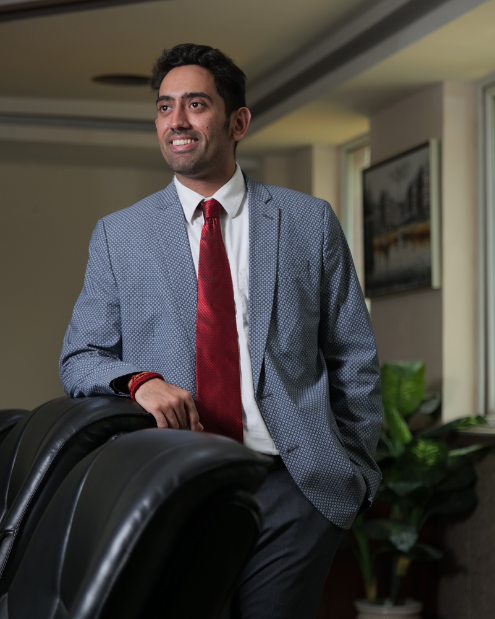
Success can mean something different to everyone. What does success look like to you today?
Success is the ability to live in alignment with your values. I don’t believe it’s something the world can measure for you. Titles, wealth, and recognition can all disappear, but your character, your peace of mind, and the way you treat other people stay with you. If I’m growing as a person, staying true to my principles, and making a positive impact on someone else’s life, I feel successful regardless of what my résumé says.
Has your definition of success changed over the years?
It changed because I started asking different questions. Early in my career, I was focused on building credentials and proving myself. I earned degrees, worked hard, and chased opportunities because I thought achievement naturally led to fulfillment.
Eventually, I realized I was spending more time asking, “What’s next?” than asking, “Why am I doing this?”
That question led me toward philosophy, spirituality, and a lot of self-reflection. I became fascinated by how different cultures and traditions define a meaningful life. The more I studied, the more I realized that purpose isn’t something you discover once. It’s something you choose through your daily actions.
That shift changed how I approach business, relationships, and volunteer work. Instead of asking whether something will make me more successful, I ask whether it aligns with the person I’m trying to become.
Your family has played an important role in your journey. How did those experiences shape your outlook?
My parents showed me what resilience looks like. They immigrated to the United States, built a business through hard work, and never lost sight of the importance of helping others. My sister has also been one of the biggest influences in my life. Growing up with her taught me compassion and reminded me that every person deserves dignity, opportunity, and support. Those lessons have stayed with me throughout my career.
Why has volunteer work become such an important part of your life?
Volunteer work reminds me that success isn’t only about what we build for ourselves. It’s also about what we build for others. I’ve had the opportunity to support organizations focused on education, disability services, food distribution, and women’s empowerment. Those experiences have shown me that lasting change usually comes from creating systems that continue helping people long after one project ends.
How does that perspective influence the way you approach business?
Business and philanthropy aren’t separate in my mind. Both are about solving problems and creating value. In business, you’re trying to improve organizations and create opportunities. In philanthropy, you’re trying to improve lives and strengthen communities. The same principles apply. Think long term. Build strong systems. Stay focused on people. When you approach both with that mindset, they naturally complement one another.
You’ve spoken about philosophy and spirituality before. What role do they play in your leadership?
They help me slow down and think beyond immediate results. Philosophy encourages me to ask better questions instead of rushing toward quick answers. It reminds me that leadership isn’t about controlling people. It’s about serving them, learning from them, and helping them become stronger. That perspective keeps me grounded, especially during difficult periods.
What’s one misconception people have about successful people?
I think many people assume successful individuals always know exactly where they’re going. In reality, most people spend time searching for direction. I’ve experienced uncertainty, self-doubt, and difficult seasons like everyone else. What matters isn’t avoiding those moments. It’s continuing to move forward while learning from them.
How do you stay motivated when progress feels slow?
I remind myself to focus on the process instead of the outcome. We can’t control every result, but we can control our effort, discipline, and consistency. If I continue improving the process, the results usually take care of themselves over time. That mindset has helped me stay patient when progress isn’t immediately visible.
What advice would you give someone who is chasing success today?
Spend as much time understanding yourself as you spend developing your career. Skills and experience are important, but they become much more powerful when they’re connected to a clear sense of purpose. Don’t build a life around other people’s expectations. Build one around your values. Success becomes much more meaningful when it reflects who you are instead of who you think you’re supposed to be.
What legacy do you hope to leave behind?
I hope people remember me as someone who tried to leave every place a little better than I found it. Whether through business, volunteer work, mentorship, or philanthropy, I want my work to create opportunities that continue helping others long after I’m gone. To me, that’s the kind of success that lasts.