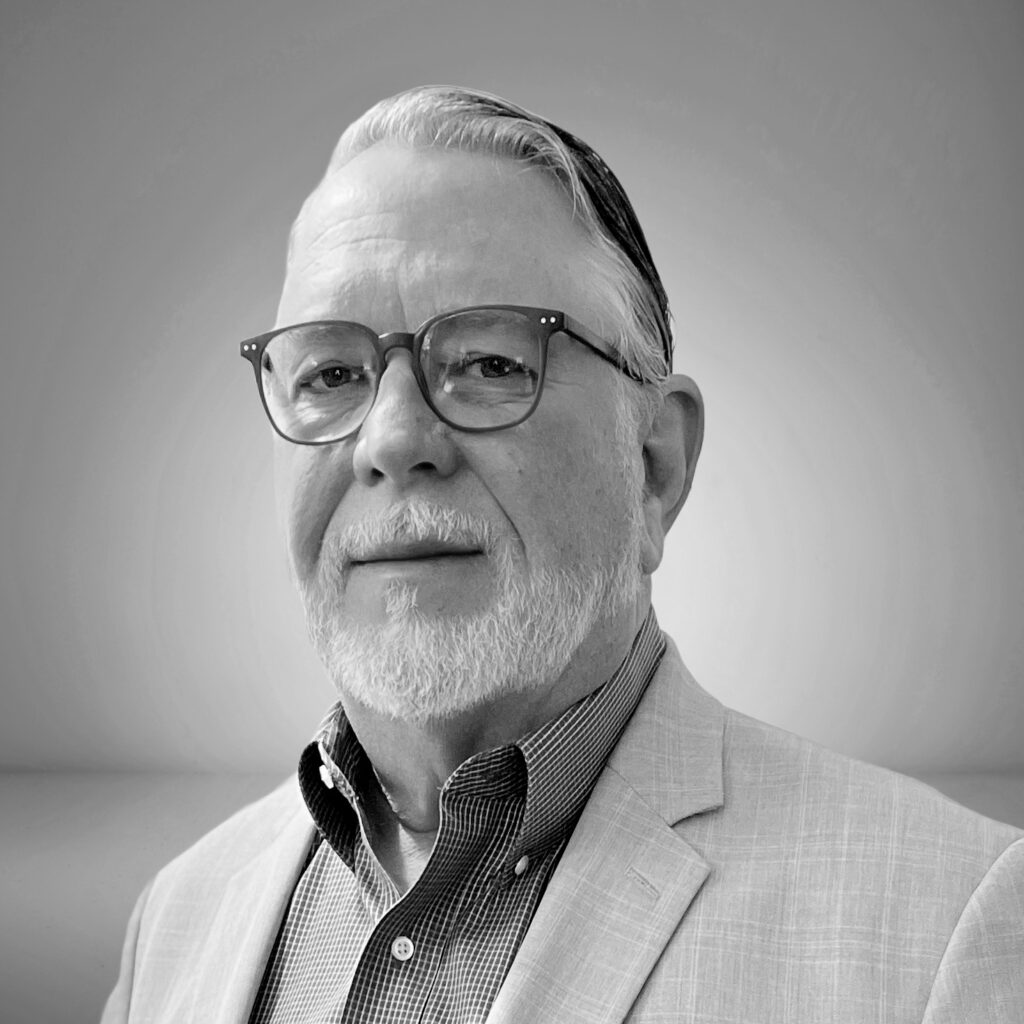
David Johnson grew up on a farm in southern Oklahoma, raised by his grandparents. He learned the value of hard work early—feeding cattle, fixing fences, and managing with little. Those lessons stayed with him.
After high school in Rockwall, Texas, David entered the workforce young and climbed the IT ladder step by step. He spent a decade at American Airlines running data centres. Then came roles at Deloitte & Touche, Solid Systems, and ERCOT—where he helped digitise the state’s newly deregulated energy market, managing over 35 million daily transactions.
At EPB in Chattanooga, he helped design one of the first fully automated electric grids in North America. At Austin Water, he served as CIO and CISO, leading large teams, modernising legacy systems, and pushing for cloud and cybersecurity upgrades across city utilities.
David earned his business degree later in life from Covenant College. He’s served on advisory boards, led teams of 120+, managed $100M+ budgets, and overseen global system transformations across the U.S., Europe, and Australia.
What sets him apart isn’t just the technical leadership. It’s his ability to bridge two worlds: operations and IT. Boardroom strategy and boots-on-the-ground delivery.
Now based in Tyler, Texas, David continues to consult and raise cattle. He believes success is about staying grounded, building resilient systems, and leaving things better than you found them. Whether it’s a legacy system or a family ranch—he builds with the long term in mind.
Q&A on the Topic of Success with David Johnson
Q: What does success mean to you?
David Johnson: To me, success is about making something stronger than it was when you found it. That applies to people, systems, and teams. I’ve worked in places where failure wasn’t an option—like when we transitioned Texas to a deregulated energy market. If our systems broke, millions of people lost power. Success meant stability under pressure.
Q: What’s a typical day like for you now—and how do you make it productive?
I still start early, usually before 6 a.m. Even now, I split time between consulting work and managing the farm. I’ve always worked from lists—one side for quick wins, one side for deep-focus tasks. I try to get the quick things off my plate before lunch, so the rest of the day is reserved for heavier lifts.
Q: What’s one habit that’s helped you over the years?
Daily logs. I keep a single-page printout next to me. It’s not fancy, but it keeps me focused. I also believe in small prep habits—like reviewing team goals weekly and blocking time for “no-meeting” strategy windows.
Q: You’ve worked across massive systems—energy, water, government. What’s the one thing that consistently drives success in those environments?
Context. I always make sure I understand how a system really works—sometimes that means standing in a water treatment plant or visiting a utility control room. You can’t make good decisions from a distance. Success comes from understanding your people, your tech, and your risks.
Q: What’s a belief you hold that most people don’t agree with?
I think IT leaders should literally spend time in the field. If you’re supporting a critical system—like a grid—you need to understand the physical side of it. Technology without context is dangerous. I’ve had folks raise eyebrows when I show up in steel-toed boots, but it always pays off.
Q: What’s one failure you faced—and how did you recover?
Early in my consulting days, I underestimated a client’s project scope and under-quoted the timeline. We ran late. Trust took a hit. After that, I built a rule: never submit a timeline until you’ve walked the system end to end. These days, I pad time conservatively and leave room for testing, transitions, and handoffs.
Q: What’s one business idea you’d give away for free?
There should be a simulation training tool for utility IT teams—something like a “flight simulator” for infrastructure failure scenarios. It’s niche, but it would save cities millions in outage recovery time.
Q: What software helps you stay productive?
Grafana. It gives me real-time system visibility. When I was managing 20+ platforms at Austin Water, having a dashboard saved me hours of guessing.
Q: What advice would you give your younger self?
Learn to communicate clearly and directly. Technical skills will get you in the room. Communication will keep you there.
Q: What’s one small thing everyone should do?
Cross-train your team. Your best plan can fall apart if only one person knows how something works.
Key Learnings:
- Context matters. Understanding the system—physically and technically—leads to smarter decisions.
- Small habits drive big impact. Daily logs and planning windows can protect long-term focus.
- Cross-training builds resilience. Don’t rely on single points of human failure.
- Mistakes teach timing. Conservative planning and communication are essential in high-stakes environments.
- Leadership starts on the ground. Even senior tech leaders should walk the field to understand what they’re managing.