
Thirukumaran Sivasubramaniam is the Co-Founder and COO of Fintex Inc., a fintech company based in Toronto, Ontario, that builds wealth technology platforms for major Canadian financial institutions. He holds a degree in Computer Science and Mathematics from the University of Waterloo and brings more than two decades of software engineering and technical leadership experience to his current role. His career has taken him through Amazon, Redknee, Sigma Software Solutions, and RBC Global Asset Management, where he directed innovation and solutions architecture for the firm’s global asset management division. In 2023, he co-founded Fintex Inc. to focus on fintech infrastructure. He is also known in his community as a mentor to immigrant youth and newcomers to Canada, having helped numerous individuals secure their first professional roles. Sivasubramaniam grew up in Toronto after immigrating from Sri Lanka at age nine, a journey that shaped his approach to hard work, consistency, and giving back.
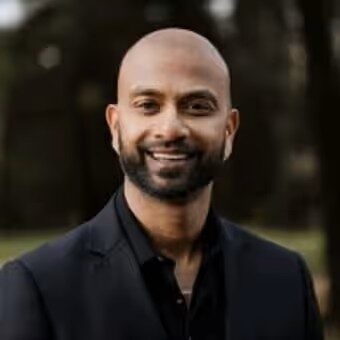
Q&A with Thirukumaran Sivasubramaniam
How do you personally define success?
Success, for me, has always been about building something that lasts. Not the fast version. Not the highlight version. The kind of success that shows up in the quality of the work and in the people you bring along the way.
I came from a family that had nothing when we arrived in Canada. My mother raised five kids on welfare. She worked without complaint and made education the center of everything we did. That framing never left me. Success became about making that sacrifice mean something, in concrete ways.
Was there a moment in your career that shifted your thinking on what success actually required?
Early in my career at Amazon, I was part of a design review team. Experienced engineers would assess projects before a line of code was written. I was young, and watching that process changed how I approached my own work. I realized that the best outcomes came from people who were willing to slow down, think clearly, and challenge assumptions before they committed to a direction.
That was not how I was naturally wired. I wanted to move fast. Learning to value rigor over speed was a harder discipline than any technical skill I picked up in that period.
You spent nearly six years at RBC after Wiser Investments was acquired. What did working inside a major institution teach you about success?
Large institutions are successful for reasons that are not always visible from the outside. The processes, the governance, the cross-functional dependencies. They can feel slow, but they exist because someone learned a hard lesson about what happens when you skip them.
What I took from those years was a respect for structure. When I started Fintex, I brought that with me. A startup that wants to work with major financial institutions has to meet those institutions where they are. You cannot build credibility in that world by cutting corners on quality or process.
How do you measure success inside a startup, where the outcome is still uncertain?
You look at the inputs more than the outputs. Are we building the right team? Are we making disciplined decisions about where to invest our energy? Are we delivering what we promised to our clients? Those are the measures you can actually control in the early stages.
The outcomes will follow if the inputs are right. That belief has kept me steady in the more uncertain periods. At Fintex, we are still in that phase where the daily work is about building the foundation correctly. I take that seriously.
You have spent a lot of time mentoring people. How does that connect to your idea of success?
Mentoring is the part of my work that feels most clearly tied to something real. I know what it cost my family to get me to a point where I could compete for a role at a company like Amazon. I know what it takes for a newcomer to Canada to navigate a professional environment without the network or the context that people who grew up here often take for granted.
When I help someone land their first job in tech, I am not just helping one person. That person goes on to build something. They mentor someone else. That is a success I can see compounding in a way that is deeply satisfying to me.
What habits or practices do you keep coming back to?
I walk every morning. Every day, regardless of weather. It sounds simple, but it is a commitment that clears my head before the day starts and reminds me that I can do difficult things consistently. The discipline of a morning walk transfers.
I also invest significant time in staying current with technology trends. The industry moves fast, and the work I do requires that I understand what is coming, not just what exists today. Continuous learning is not optional in this field.
What would you tell someone who is at the beginning of a technical career and feels like the distance to meaningful success is enormous?
I would tell them that the distance is real but it is not the problem. The problem is trying to close it all at once. Every role I held built on the one before it. Amazon prepared me for Redknee. Redknee prepared me for RBC. RBC prepared me for Fintex.
You do not skip stages in this kind of career. You do the work in front of you as well as you can, you stay curious, and you keep your network in good repair. The opportunities appear when you have built enough foundation to be ready for them.